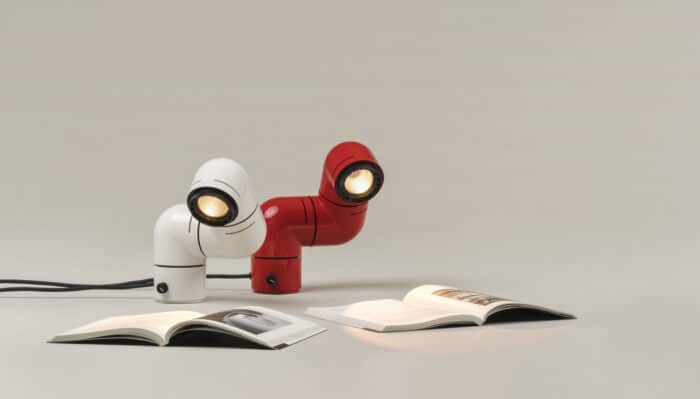
André Ricard Takes Centre Stage in a New Exhibition at DHub Barcelona
The Museu del Disseny opens one of the most eagerly anticipated exhibitions in its annual programme. André Ricard. Design in… More →
One of the most distinctive features of summer festivities in Catalonia is their visual identity: posters, illustrations and visual concepts that each year help bring these celebrations to life and give them a personality of their own.
This year, two of Barcelona’s most prominent celebrations feature the talent of the BAU community in their visual identity: the Festa Major de Gràcia and the Diada Nacional de Catalunya.
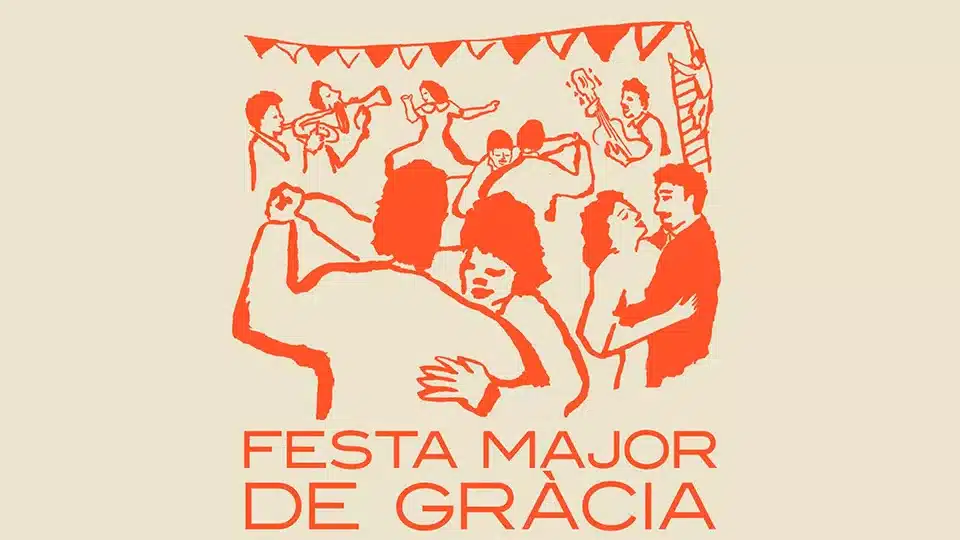
BAU Graphic Design graduate Pol Lupiáñez, known artistically as Kota, is the creator of the poster for the 2026 Festa Major de Gràcia. His proposal was selected as the winner of the 33rd edition of the competition organised by the district, chosen from a total of 266 entries.
The piece draws on one of the most characteristic elements of the celebration: the street as a meeting place. The neighbourhood, community and shared celebration form the central theme of a proposal that brings back the spirit of taking to the streets to dance, meet and celebrate together with neighbours.
To reinforce this popular and handcrafted character, Kota worked exclusively with Chinese ink, a choice that highlights the manual gesture and the more human dimension of illustration through a contemporary graphic perspective.
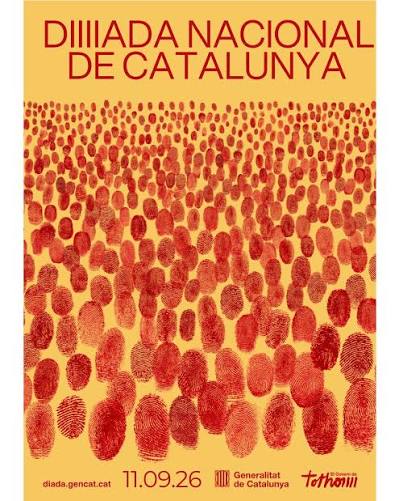
Meanwhile, Javier Jaén, lecturer on BAU’s Master’s Degree in Creative Illustration and a recognised figure in the world of poster design, is behind the visual identity of this year’s Diada Nacional de Catalunya.
Jaén has created a proposal featuring red fingerprints on a yellow background, a composition that immediately evokes the colours of the Senyera. But beyond the colour reference, the fingerprint and the mark left by our hands also connect with the origins of humanity and prehistoric caves, where leaving a trace could become a way of asserting one’s existence and making it clear that we are here.
This same idea is carried over into the Diada, understood as a moment when Catalan identity is expressed collectively, as a project that is constantly evolving and being built. The multitude of fingerprints therefore symbolises the sum of the different identities that coexist within the same space.
These two proposals, conceived from very different starting points, share a common idea: graphic design can become a reflection of community. Two visual approaches that demonstrate how design can communicate plural realities while, at the same time, reminding us of what we share.
In both cases, the individual gesture becomes a collective image: whether through the experience of living in and celebrating the neighbourhood, or through the sum of fingerprints that come together to create a shared identity.
The Museu del Disseny opens one of the most eagerly anticipated exhibitions in its annual programme. André Ricard. Design in… More →
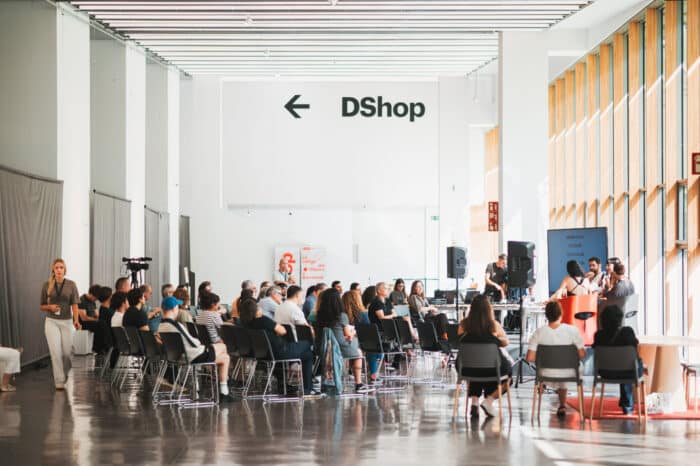
Driven by Poblenou Urban District in collaboration with Disseny Hub Barcelona, the Urban Talks gatherings reach their tenth edition this… More →
This weekend, on 17 and 18 October, the seventeenth edition of Barcelona Dibuixa takes place, a festival that turns drawing… More →